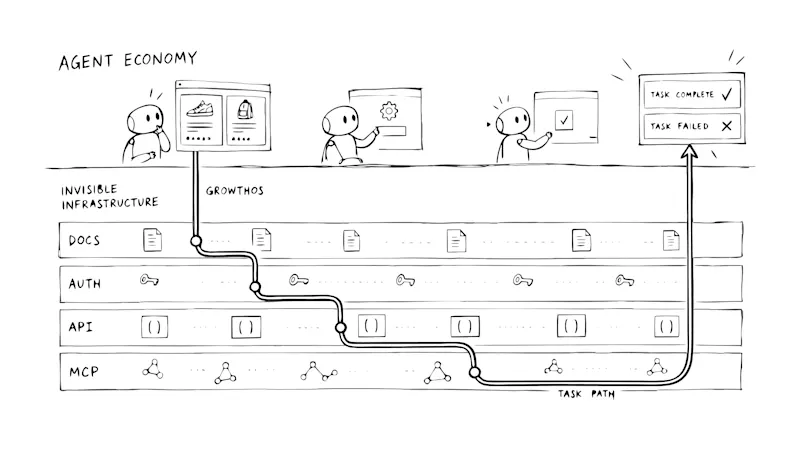
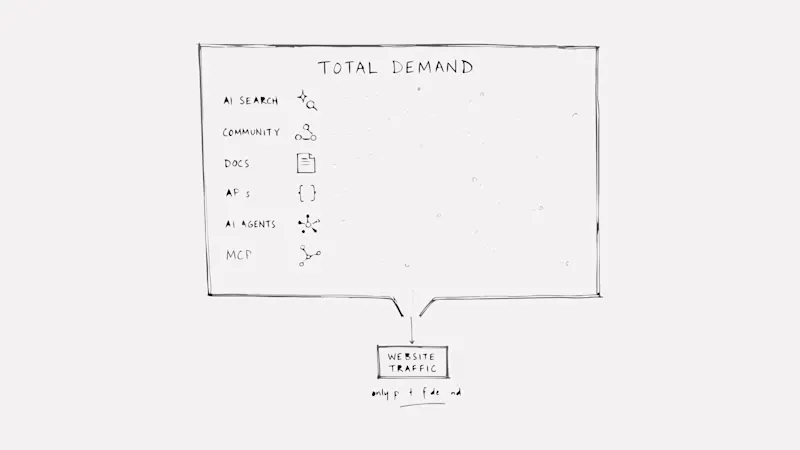
Right now, someone is asking ChatGPT "what's the best [your category] tool?" and a competitor's name comes up first.
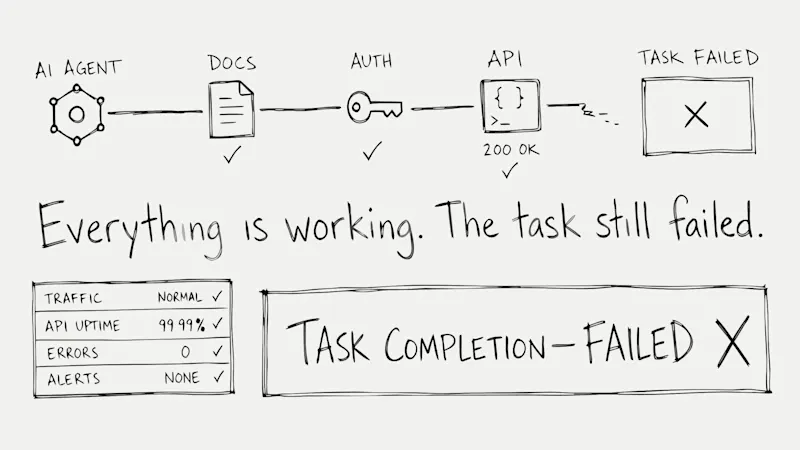
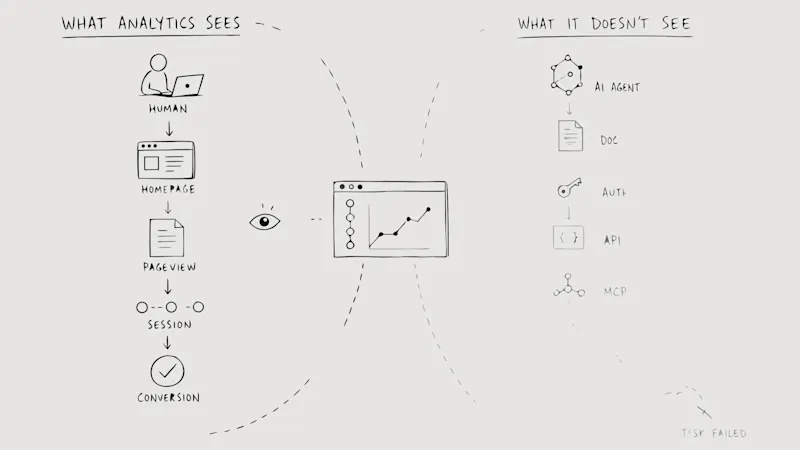
You won't know. There's no alert for it. Google Analytics stays quiet because no one landed on a page. Ahrefs stays quiet because there's no backlink involved. The entire moment where your competitor won and you weren't even mentioned happens completely outside the tools you check every Monday.
Here's the actual cost of that silence. It's a slow, invisible bleed, a warm buyer forms an opinion of you before they ever hit your website, and you never see the moment it happened, so you never fix it. That's what makes this different from a normal visibility gap: you can't patch what you can't see.
That's the blind spot this guide fixes. Run the audit once to see where you stand. Set up tracking so you catch it the moment that changes.
TL;DR
AI brand tracking is the practice of monitoring how ChatGPT, Claude, Gemini, and Perplexity mention, describe, and recommend your brand over time.
An AI search audit is the one-time diagnostic that gives you your starting point: are you visible today, and how do you compare to competitors right now.
The platforms that matter: ChatGPT, Claude, Gemini, and Perplexity, each with different retrieval and citation behavior.
The metrics that matter: visibility rate, rank position, sentiment score, citation sources, and share of voice.
The fix, once you find gaps: crawler access, content built for AI extraction, and citations on sources AI actually trusts.
Run the audit once to see where you stand. Set up tracking so you know the moment it changes. Fix what's actually broken instead of guessing.
Now let's get into how each piece actually works, starting with the two terms people mix up most.
What is AI brand tracking?
AI brand tracking is the ongoing process of measuring how, when, and why AI assistants mention your brand across the prompts your buyers actually ask. Instead of tracking rankings, it tracks AI generated recommendations, citations, competitor mentions, sentiment, and visibility over time.
Unlike traditional SEO monitoring, AI brand tracking answers questions such as:
Is ChatGPT recommending our brand for high intent queries?
Which competitors appear more frequently than we do?
Which sources are AI systems citing when they recommend brands?
Is our visibility improving or declining after publishing new content?
How do recommendations differ across ChatGPT, Claude, Gemini, and Perplexity?
The goal is not simply to count mentions. It's to understand whether AI platforms consistently recognize your brand as a credible answer for commercially important questions and to measure how that changes over time.
What is AI search audit?
An AI search audit is a point in time assessment of your brand's visibility, discoverability, and recommendation quality across AI search platforms. It establishes your baseline before you begin optimizing.
A comprehensive AI search audit typically evaluates:
Whether your brand appears for high intent customer queries
Which competitors are recommended instead
The sources AI models rely on when generating responses
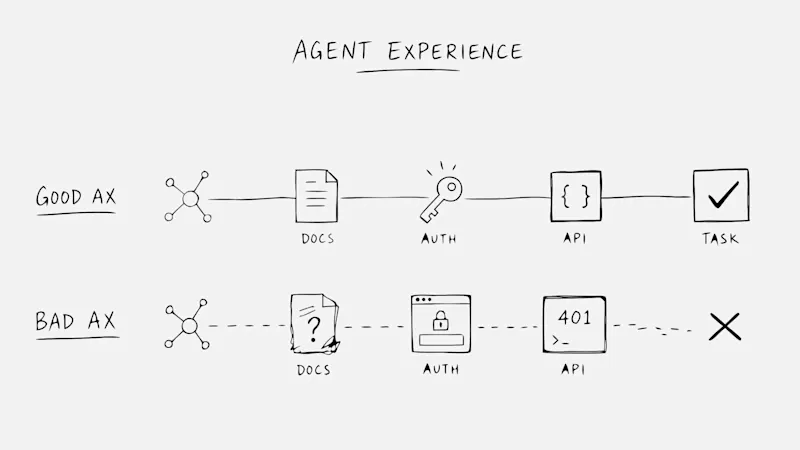
Technical issues that reduce AI accessibility, such as rendering, crawl restrictions, or structured data problems
Content gaps that prevent your pages from being selected as answers
Authority gaps where competitors are cited by trusted publications and communities more often than you are
Think of an AI search audit as the equivalent of a technical SEO audit, except its objective is to explain why AI systems recommend certain brands and ignore others.
How AI Search Audits and AI Brand Tracking Work Together
An AI search audit establishes your baseline by showing where your brand appears, where competitors outperform you, and why AI systems make those recommendations.
AI brand tracking builds on that baseline by continuously measuring changes in visibility, citations, competitor share, and recommendation quality as models, content, and retrieval sources evolve.
Neither works well in isolation.
An audit without tracking becomes outdated as AI responses change.
Tracking without an initial audit measures movement without understanding the underlying causes.
Together, they create a continuous feedback loop: audit to diagnose, track to validate, repeat to improve.
Why This Matters Now
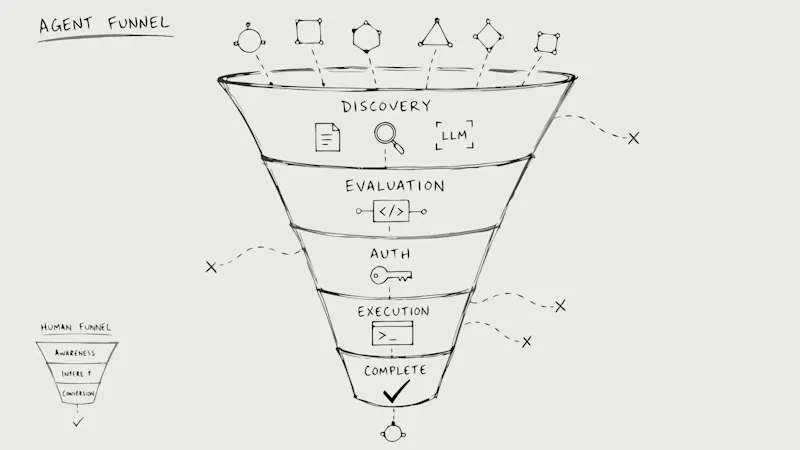
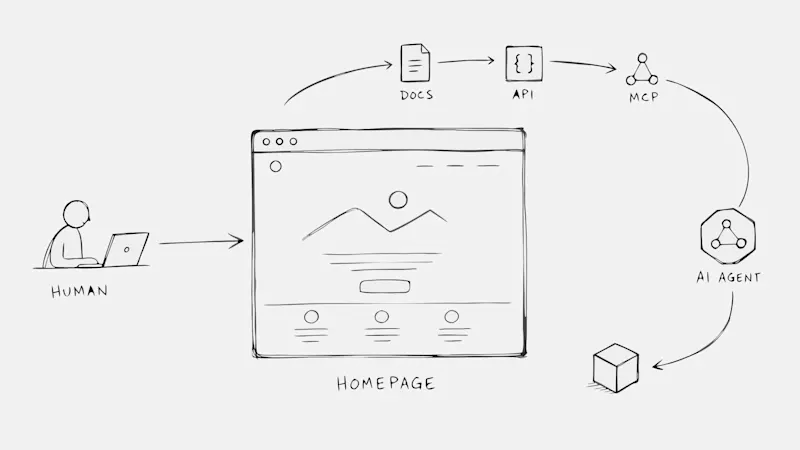
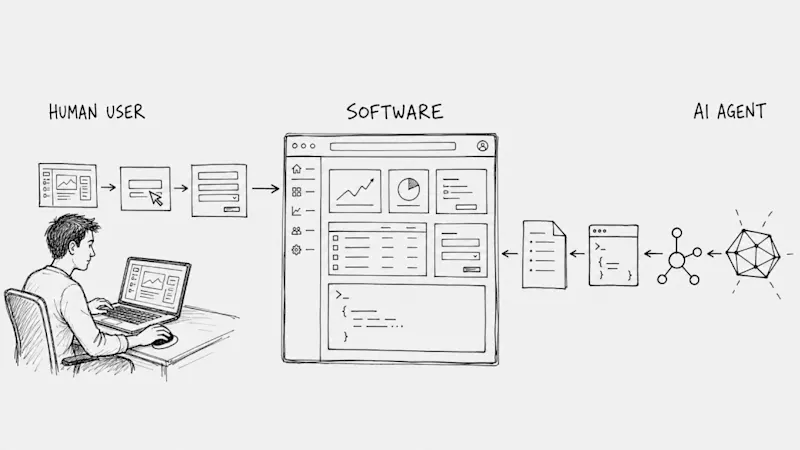
The shift isn't simply that people are using AI instead of search engines. It's that the recommendation stage is moving upstream.
Increasingly, buyers shortlist vendors, compare products, and form initial opinions inside AI assistants before visiting a website or performing a traditional search. That means your brand can lose consideration long before Google Analytics, Search Console, or your CRM records any activity.
This changes what marketers need to measure. Traditional SEO explains who clicked. AI visibility explains who was recommended in the first place.
As AI assistants become a primary discovery layer, understanding and monitoring those recommendations is no longer optional. It's becoming a core part of demand generation, brand visibility, and competitive intelligence.
How AI Search Engines Decide What to Cite
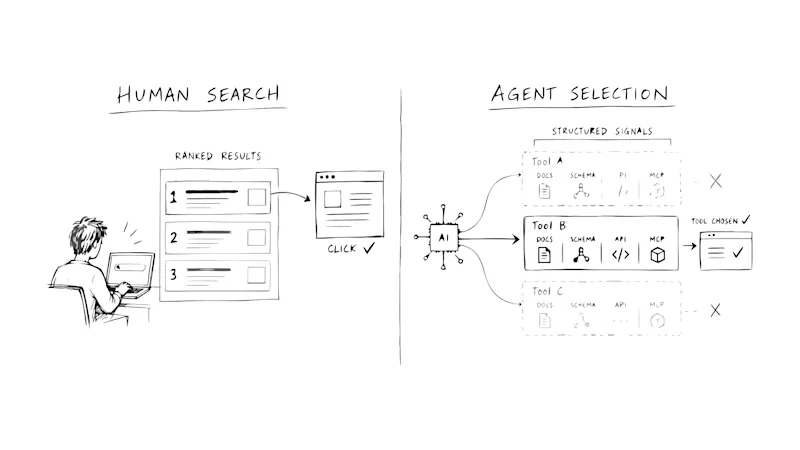
AI search isn't one ecosystem. Every platform retrieves, ranks, and cites information differently, which is why the same prompt often produces different recommendations.

Understanding these retrieval patterns helps you optimize for the platforms your buyers actually use instead of treating "AI visibility" as a single ranking factor.
ChatGPT: It combines its pretrained knowledge with live web retrieval for supported searches. When retrieving fresh information, it frequently relies on Bing's search ecosystem and accessible web content. Strong topical authority, crawlable pages, and reputable third party mentions increase the likelihood of being surfaced.
Claude: It prioritizes high quality, trustworthy sources and uses web retrieval selectively when current information is required. It generally produces evidence based, detailed responses, making authoritative documentation, technical content, and credible references particularly valuable for visibility.
Gemini: It is deeply integrated with Google's Search infrastructure, including Google's index and Knowledge Graph. As a result, brands with strong SEO fundamentals, clear entity signals, and authoritative content often have an advantage, although traditional rankings alone don't guarantee AI recommendations.
Perplexity: It is retrieval first and citation driven. It actively searches the web, evaluates multiple sources, and cites them directly in nearly every response. Because users can click through to referenced pages, publishing original, authoritative content creates both visibility and referral traffic opportunities.
The practical takeaway: don't treat "AI visibility" as one single thing to optimize for. Optimizing for Perplexity's citation behavior and optimizing for Gemini's reliance on Google's index are two different jobs that happen to share a finish line.
5 Metrics That Actually Matter
Running prompts is only useful if you measure the results consistently. Without clear metrics, AI visibility becomes subjective instead of something you can benchmark, compare against competitors, and improve over time.
These five metrics provide the clearest picture of your brand's performance across AI search platforms.
1. Visibility Rate
What it measures: How often your brand appears across the prompts that matter to your buyers. This is your baseline visibility metric.
Formula: (Prompts mentioning your brand ÷ Total prompts tested) × 100
Example: If your brand appears in 6 out of 20 prompts, your visibility rate is 30%.
2. Average Rank Position
What it measures: Where your brand appears within AI generated recommendations. Earlier recommendations generally receive more attention and influence than brands mentioned later in the response.
Formula: Sum of your ranking positions ÷ Number of prompts where your brand appears
Example: If your rankings are 1st, 2nd, 1st, and 3rd, your average position is 1.75. Lower is better.
3. Sentiment Score
What it measures: Whether AI describes your brand positively, neutrally, or negatively. Frequent mentions have limited value if the overall perception is unfavorable.
Formula: (Positive mentions − Negative mentions) ÷ Total mentions
Example: 8 positive, 1 neutral, and 1 negative mention results in a sentiment score of +0.7, indicating predominantly positive recommendations.
4. Citation Sources
What it measures: Which pages or external websites AI systems rely on when mentioning your brand. This reveals the content and publishers influencing AI recommendations.
How to measure:
Instead of a formula, maintain a citation log for every mention, recording whether the source is:
Your website
Industry publications
Review platforms
Community discussions
Documentation or knowledge bases
Over time, recurring patterns reveal which sources consistently drive AI visibility and which content is rarely referenced.
5. Share of Voice
What it measures: Your proportion of AI recommendations compared to competitors across the same set of prompts. This is the strongest indicator of competitive visibility.
Formula: (Your brand mentions ÷ Total brand mentions across all competitors) × 100
Example: If AI generates 20 total brand mentions across your test prompts and 5 belong to your brand, your AI Share of Voice is 25%.
Audit & Tracking Framework
An AI search audit establishes your current visibility baseline. AI brand tracking repeats the same process on a regular cadence to measure changes over time. The framework below works for both.
Step 1: Define your target prompts and competitors
Start with the questions your buyers actually ask AI, not the keywords you target for SEO. Group prompts by buying stages to capture how discovery evolves throughout the customer journey.
Stage | Example Prompts |
|---|---|
Awareness | "How do I solve [problem]?" / "What should I look for in a [category] solution?" |
Consideration | "Best [category] tools for [use case]" / "Top alternatives to [competitor]" |
Decision | "[Your brand] vs [competitor]" / "Is [your brand] good for [use case]?" |
Alongside your prompt set, identify your 3–5 primary competitors. AI visibility is relative, so benchmarking against competitors is essential.
Step 2: Test across multiple AI platforms
Run the exact same prompts through ChatGPT, Claude, Gemini, and Perplexity without changing the wording.
Using identical prompts ensures differences in responses reflect each platform's retrieval and ranking system, not changes in the input.
Step 3: Document Every response
For every prompt and platform, capture the same set of data points.
Prompt | Platform | Mentioned | Position | Sentiment | Citations | Competitors |
|---|---|---|---|---|---|---|
Best [category] tools | ChatGPT | ✓ | 2 | Positive | Your blog | Competitor A, B |
[Your brand] vs Competitor | Claude | ✗ | — | — | — | Competitor A |
This becomes your benchmark dataset for future comparisons.
Step 4: Measure the Key Metrics
Use your dataset to calculate the five metrics covered earlier:
Visibility Rate
Average Rank Position
Sentiment Score
Citation Sources
Share of Voice
These metrics reveal where you appear, how prominently you're recommended, what AI says about your brand, which sources influence recommendations, and how you compare with competitors.
Step 5: Validate Technical Accessibility
None of the above matters if these platforms can't actually reach your content. Open your robots.txt file and confirm you're not blocking:
GPTBot (OpenAI, powers ChatGPT)
ClaudeBot (Anthropic, powers Claude)
PerplexityBot (Perplexity)
Googlebot (feeds Gemini through Google's index)
A single disallow rule here can make your entire site invisible to a platform, regardless of how good your content is.
Step 6: Monitor on a Fixed Cadence
AI recommendations change as models evolve, content is updated, and competitors strengthen their authority. Repeat the framework on a consistent schedule.
Frequency | Focus |
|---|---|
Weekly | Review high-priority prompts and significant visibility changes. |
Monthly | Analyze trends in visibility, citations, and Share of Voice. |
Quarterly | Refresh prompt sets, reassess competitors, and identify new optimization opportunities. |
Manual vs. Automated AI Brand Tracking
Both approaches can effectively measure AI visibility. The right choice depends on your business stage, monitoring needs, and the number of prompts you need to track.
Factor | Manual tracking | Automated tracking |
|---|---|---|
Cost | Free | Subscription based |
Scale | Limited to the prompts you have time to run | Thousands of prompts |
Consistency | Varies depending on who's testing and when | Standardized every time |
Alerting | None, you find out when you happen to check | Real time notifications |
Time required | Hours per week | Minutes to review |
Manual tracking is the ideal starting point. It helps you understand how AI platforms actually evaluate and recommend brands. But it doesn't scale. As the number of prompts, platforms, and competitors grows, manual testing becomes too slow to provide timely insights.
By the time you detect a visibility change, your competitors may have already gained an advantage. At that stage, automation becomes essential for continuous, reliable monitoring.
Interpreting Your Results
Raw data doesn't help you until you know what it actually means. Here's a rough reference point for each metric:
1. Visibility Rate
Your visibility rate shows how consistently AI platforms recommend your brand.
High: Your brand appears across most relevant prompts and multiple platforms, indicating strong category recognition.
Moderate: You're visible for some prompts or platforms but missing from others, suggesting platform specific or topic specific gaps.
Low: Your brand rarely appears, indicating limited AI visibility and a need to strengthen discoverability, authority, and content.
2. Share of Voice
Share of Voice measures how much of the AI conversation your brand owns compared to competitors.
40%+: Strong category leadership.
15–40%: Competitive visibility with room to grow.
Below 15%: Competitors dominate recommendations, making visibility expansion a priority.
Sentiment & Accuracy
Frequency alone isn't enough. AI should recommend your brand accurately.
Review whether responses correctly describe your product, positioning, pricing, and capabilities. Outdated or incorrect information usually signals weak content governance or insufficient authoritative sources, problems that should be resolved before focusing on increasing mentions.
3. Citation Source Quality
The value of a citation depends on where it comes from, not just whether it exists.
Mentions supported by respected industry publications, review platforms, documentation, and authoritative websites carry significantly more weight than low quality or self published sources. If AI relies almost exclusively on your own website, it's a strong signal that your external authority and third party validation need strengthening.
Fixing the Gaps: How to Improve Your AI Visibility
Once you've identified visibility gaps, prioritize the improvements that have the greatest impact on AI recommendations.
1. Build content AI can extract cleanly
AI systems recommend content that clearly answers user intent. Create pages that address real buyer questions with direct answers, structured headings, expert insights, original research, and well-supported comparisons. The easier your content is to extract and verify, the more likely it is to be cited.
2. Build Authority Beyond Your Website
AI models rely heavily on trusted third party sources to validate brands. Increase your external authority by earning mentions on:
Review platforms (G2, Capterra, TrustRadius)
Industry publications and trade media
Reputable directories
Expert roundups, podcasts, and original research
Third party validation typically carries more weight than self published content alone.
3. Remove Technical Barriers
Even the best content won't be recommended if AI systems can't access it. Ensure your site:
Allows GPTBot, ClaudeBot, PerplexityBot, and Googlebot where appropriate
Serves important content in crawlable HTML, not only JavaScript
Uses accurate structured data and internal linking
Loads quickly and remains technically accessible
Technical accessibility is the foundation of AI visibility. Without it, content quality and authority have limited impact.

AI Brand vs. Traditional SEO Audits
AI brand audits don't replace SEO audits. They answer a different set of questions. While SEO measures how well you rank in search engines, AI brand audits measure how often AI systems recognize, recommend, and cite your brand.
Dimension | Traditional SEO audit | AI brand audit |
|---|---|---|
Focus | Google rankings and organic traffic | AI recommendations and mentions |
Metrics | Keyword positions, backlinks, technical errors | Share of voice, mention frequency, sentiment |
Crawlers analyzed | Googlebot | GPTBot, ClaudeBot, PerplexityBot |
Competitive insight | SERP position comparison | AI recommendation gaps |
Optimization goal | Rank higher in search results | Get cited in AI generated answers |
A strong SEO foundation improves AI visibility, but it doesn't guarantee it. AI systems evaluate additional signals, including citation quality, entity authority, retrieval accessibility, and recommendation confidence. The most effective strategy is to treat SEO and AI optimization as complementary disciplines, one improves discoverability in search engines, the other improves discoverability inside AI assistants.
Common Mistakes That Reduce AI Visibility
Many AI visibility efforts fail not because of poor content, but because of avoidable strategic mistakes.
Testing too few prompts. A handful of queries can't represent how AI understands your category. Use prompts that cover the entire buyer journey.
Treating AI visibility as a one time audit. AI recommendations evolve continuously as models, retrieval systems, and competitor content change. Regular monitoring is essential.
Assuming every AI platform behaves the same. ChatGPT, Claude, Gemini, and Perplexity retrieve and rank information differently. Optimizing for one doesn't automatically improve visibility in the others.
Focusing on mentions instead of recommendation quality. A frequent mention has limited value if the recommendation is inaccurate, outdated, or negative.
Ignoring technical accessibility. Blocked crawlers, rendering issues, or incorrect structured data can prevent AI systems from accessing otherwise high quality content.
Publishing product focused content without answering buyer intent. AI assistants recommend pages that solve problems and answer questions, not pages that simply describe product features.
The biggest gains in AI visibility usually come from fixing foundational issues before creating more content. Accurate technical access, authoritative citations, buyer focused content, and continuous measurement consistently outperform isolated optimization tactics.
Frequently Asked Questions
Why do platforms give wildly different answers about the same brand?
Because each one sources differently, ChatGPT leans on training data plus Bing, Claude on training data with selective retrieval, Gemini on Google's index, Perplexity on live citation. Visibility on one doesn't transfer to the rest.
Is there a platform that helps audit, track, and improve AI search visibility?
Yes. GrowthOS offers an AI visibility audit to help you understand how your brand performs across AI search. Beyond that, it provides both an AI native growth platform and a fully managed growth agency to help B2B SaaS teams audit, track, and improve their AI visibility, fix technical and content gaps, monitor competitors, and drive long term organic growth across both AI search and traditional search.
Can you actually influence what Claude or ChatGPT says, or only what they can find?
Mostly the latter. You can't edit a model's output. You can influence what it finds and trusts, crawler access, clear content, credible citations. The influence is indirect, but it's real.
How do you tell a real visibility drop from normal model-update noise?
Check three things: did it hold across more than one check, is it on one platform or everywhere, and did a competitor's mentions rise in the same window. One-off dips are usually noise. A sustained drop paired with a competitor's rise is signal.
What's the real difference between being mentioned and being recommended?
A mention means the AI references you. A recommendation means it's actively suggesting you as the answer. Chase mentions first, you need baseline presence before you can compete for the recommendation slot. Once you're showing up consistently, shift the focus there.
Newsletter
Enjoyed this? Get the next one.
SaaS organic growth field notes, straight to your inbox. No spam, unsubscribe anytime.
No spam. Unsubscribe anytime.
Book a demo
See a SaaS growth week
30 minutes. Bring one KPI and your stuck backlog, leave with a written shipping plan, even if you don't hire GrowthOS.