GrowthOS logo
← Back to blog

9 Best AI Visibility Tools and Platforms for 2026, Tested and Ranked

Updated Jul 9, 202613 minutes
9 Best AI Visibility Tools and Platforms for 2026, Tested and Ranked

ChatGPT alone has 900 million weekly active users as of early 2026, and when people ask ChatGPT, Claude, Gemini, or Perplexity for recommendations, strong Google rankings alone don't guarantee your brand will appear. AI answer engines rely on different retrieval systems, citation sources, and ranking signals than traditional search. AI visibility software helps you understand what these models actually say about your brand, where they cite you, and how you compare against competitors. 

We tested nine AI visibility platforms to find which ones deliver accurate tracking, actionable insights, and real competitive intelligence. This guide breaks down how each tool works, what to look for, and which platform fits your team's needs.

Best AI visibility tools at a glance

Tool

Best For

LLM Coverage

Key Strength

Pricing

GrowthOS

Comprehensive optimization

15+ platforms

Actionable recommendations

Freemium

Profound

Enterprise reporting

ChatGPT, Perplexity, Gemini

Deep analytics

Premium

Otterly.AI

Budget-friendly monitoring

Major LLMs

Cost-effectiveness

Tiered

Peec AI

Agencies and small teams

Major LLMs

High-volume tracking

Tiered

ZipTie

Google AI Overviews

Google AIO

Specialist reporting

Quote

Semrush AI toolkit

Existing Semrush users

Limited

SEO integration

Add-on

Ahrefs Brand Radar

Brand benchmarking

Limited

Brand performance

Add-on

Similarweb

SEO and GEO teams

Major LLMs

Side-by-side tracking

Premium

Scrunch AI

Enterprise AI visibility & content delivery

7 to 9 platforms

AI-ready content serving

Premium

What is AI visibility software

AI visibility software tracks how brands appear in AI-generated answers from ChatGPT, Claude, Gemini, and Perplexity. You might also hear it called Generative Engine Optimization (GEO) tools. Unlike traditional SEO tools that focus on Google rankings, AI visibility platforms monitor brand mentions, citation frequency, and sentiment across large language models.

These platforms go by a few different names, including AI visibility software, AI visibility platforms, LLM visibility tools, and AI brand visibility tools, but they all measure the same thing: whether and how your brand shows up when someone asks an AI model for a recommendation. 

The core function is simple: see what AI actually says about you. AI visibility platforms test thousands of prompts across multiple AI engines and report back on how often you're mentioned, which sources get cited, and whether the AI describes you positively or negatively.

Here's what AI visibility software typically tracks:

  • Brand mentions: Whether and how often AI names your brand in answers

  • Citation sources: Which URLs AI pulls from when referencing your brand

  • Sentiment analysis: Whether AI describes your brand positively, negatively, or neutrally

  • Share of voice: Your brand's presence compared to competitors in AI answers

Why traditional SEO tools miss AI search visibility

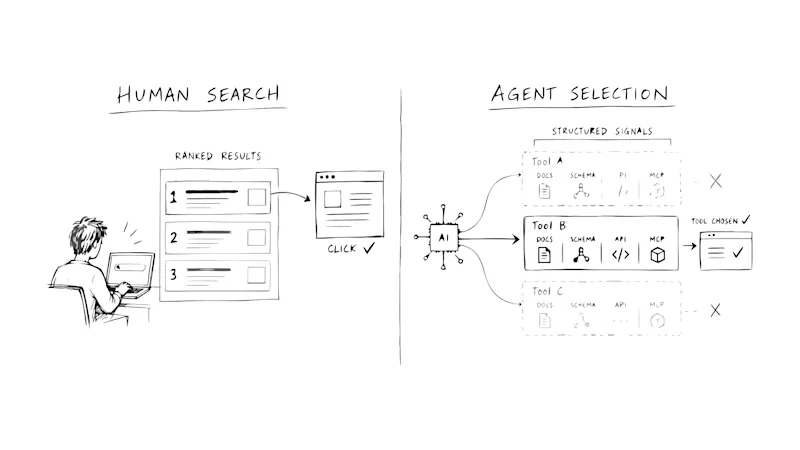
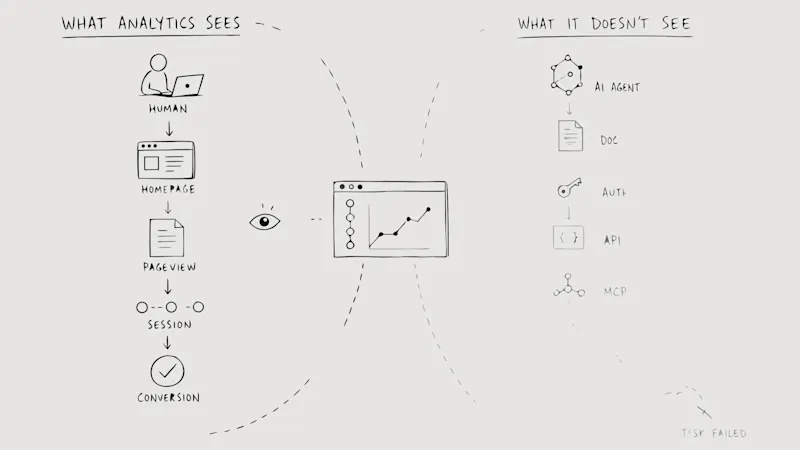
Google rankings and LLM recommendations operate on different rules. You might rank #1 for a keyword on Google while being completely absent from ChatGPT's answer to the same question. Traditional SEO tools can't see what's happening inside AI-generated responses because they weren't built to.

The gap comes down to what each tool measures. SEO platforms track keyword positions and backlinks. AI visibility platforms track mentions, citations, and share of voice within conversational answers. The data sets are fundamentally different.

Traditional SEO Tools

AI Visibility Platforms

Track Google rankings

Track LLM mentions

Measure keyword positions

Measure share of voice in AI answers

Analyze backlinks

Analyze citation sources

Monitor SERPs

Monitor AI-generated responses

So even if your SEO game is strong, you could be invisible in the places where a growing number of people now search for recommendations. Gartner predicted a 25% decline in traditional search volume by 2026 as AI chatbots take over more queries.

How we tested these AI visibility platforms

We evaluated each tool hands-on, focusing on practical criteria that matter for day-to-day use.

  • Prompt coverage and LLM platform testing: We tested each tool's coverage across ChatGPT, Claude, Gemini, Perplexity, and Google AI Overviews. Some tools monitor all five, while others focus on just one or two. Broader coverage gives you a more complete picture since LLM outputs vary significantly by platform. A brand might appear frequently in Perplexity answers but rarely in Claude's.

  • Accuracy and hallucination detection: We checked whether tools can identify when an AI makes false claims about a brand. Hallucination detection is the ability to flag when an AI states something inaccurate, like claiming your company offers a service it doesn't. Some platforms flag hallucinations automatically, while others leave you to spot them manually.

  • Competitor benchmarking capabilities: We assessed how well each tool compares your visibility against named competitors. The best platforms show exactly where competitors appear and you don't, which helps prioritize optimization efforts. Without competitor context, raw mention counts don't tell you much.

  • Actionable recommendations: We evaluated whether tools provide specific next steps or just present raw data. Actionable guidance means the platform tells you what content to create, which citations to build, and which pages to optimize. That separates useful platforms from glorified dashboards.

  • Pricing transparency: We noted whether pricing is clear upfront or requires a sales call. Transparent pricing helps teams evaluate options faster without scheduling demos just to learn the cost.

What to look for in an AI visibility platform

When evaluating tools, a few features consistently separate the useful platforms from the rest.

  • Multi-platform LLM coverage: Tracking across ChatGPT, Claude, Gemini, Perplexity, and AI Overviews matters because each platform generates different answers and pulls from largely different sources. A tool monitoring only one LLM gives you an incomplete view. Your brand might dominate in one AI engine and be nearly absent from another.

  • Real-time monitoring and alerts: Continuous tracking with instant alerts lets you respond quickly when visibility drops or a competitor overtakes you. In fast-moving categories, knowing within hours rather than weeks makes a real difference. Weekly reports are fine for baseline tracking, but alerts catch sudden changes.

  • Competitor benchmarking: Share of voice measurement shows how much of the AI conversation your brand owns versus competitors. If you're mentioned in 15% of relevant AI answers and your main competitor appears in 40%, that gap becomes your roadmap. 

  • Citation source analysis: Knowing which sources AI pulls from helps you prioritize content creation and outreach. If AI consistently cites certain publications or pages when discussing your category, those become high-value targets for your content strategy.

  • AI crawler analytics: AI crawlers like GPTBot and ClaudeBot visit your site to gather information. AI crawler analytics let you see your site through their eyes, revealing crawl issues and low-trust pages before they hurt your AI rankings. This technical layer often gets overlooked but directly affects whether AI can access and understand your content.

AI brand visibility tool reviews

1. GrowthOS

GrowthOS

GrowthOS tests thousands of prompts across more than 15 AI platforms and delivers real-time analytics, competitor benchmarking, and AI crawler analytics for GPTBot and ClaudeBot. What sets it apart is the prioritized action recommendations. Rather than just showing data, the platform tells you what content to create, which citations to build, and which pages to optimize, ranked by expected impact.

Here's how it works in practice. First, you connect your domain, and GrowthOS pulls your existing content and competitor set automatically. It then tests 1,000+ prompts across 15+ AI platforms, including ChatGPT, Claude, Gemini, and Perplexity. From there, Action Center ranks content gaps and citation opportunities by expected impact, not just raw counts, so you know what to ship first. You track your visibility score change week over week as you work through the list.

A typical Action Center recommendation reads something like this: "Add a comparison table to your pricing page, since competitors are cited in 34% of related prompts and you're cited in only 6%." That's the kind of specific, buildable fix that separates GrowthOS from a dashboard that only shows you numbers.

The free AI visibility report provides a quick starting point, delivered to your inbox in about two minutes. From there, credit-based pricing scales from free to enterprise and agency tiers with white-label options for consultants managing multiple clients.

2. Profound

Profound

It targets enterprise organizations that want deep reporting and content optimization capabilities. It offers comprehensive tracking across ChatGPT, Perplexity, and Gemini with detailed analytics dashboards. The trade-off is premium pricing that typically requires a sales conversation to access. It is particularly popular among larger marketing teams that need executive reporting and enterprise workflows.

3. Otterly.AI

Otterly.AI

It works well for teams that want basic AI visibility monitoring without enterprise costs. It covers the major LLMs and provides straightforward tracking at accessible price points. The feature set is more limited than premium options, though often sufficient for smaller operations just getting started with AI visibility.

4. Peec AI

Peec AI

It focuses on cost-effective, high-volume tracking suited for agencies and smaller teams. Setup is quick, and the platform handles competitive benchmarking across major answer engines. It's a practical choice when you're managing multiple clients or brands and want to track all of them without breaking the budget.

5. ZipTie

ZipTie

It specializes in Google AI Overviews analysis. If your primary concern is how you appear in Google's AI-generated snippets specifically, ZipTie offers deeper reporting for that platform than generalist alternatives. The narrow focus means less coverage elsewhere, but the depth on Google AIO is notable.

6. Semrush AI toolkit

Semrush AI toolkit

The Semrush AI toolkit adds AI visibility tracking to the existing Semrush platform. It's convenient if you're already a Semrush user, though the LLM coverage is more limited than dedicated AI visibility tools. Think of it as an add-on rather than a standalone solution, one that gives you some AI visibility data without switching platforms.

7. Ahrefs Brand Radar

Ahrefs Brand Radar

Ahrefs Brand Radar brings brand performance benchmarking from a trusted SEO platform. The LLM coverage has limitations, but the integration with Ahrefs' broader toolset appeals to teams already invested in that ecosystem. If you live in Ahrefs for SEO, Brand Radar keeps your AI visibility data in the same place.

8. Similarweb

Similarweb

Similarweb offers side-by-side SEO, AI search, and digital intelligence tracking, which helps teams managing both traditional and AI search channels. The platform provides a unified view of both worlds, though pricing sits at the premium end. It's built for larger teams that want everything in one dashboard.

9. Scrunch AI

Scrunch AI

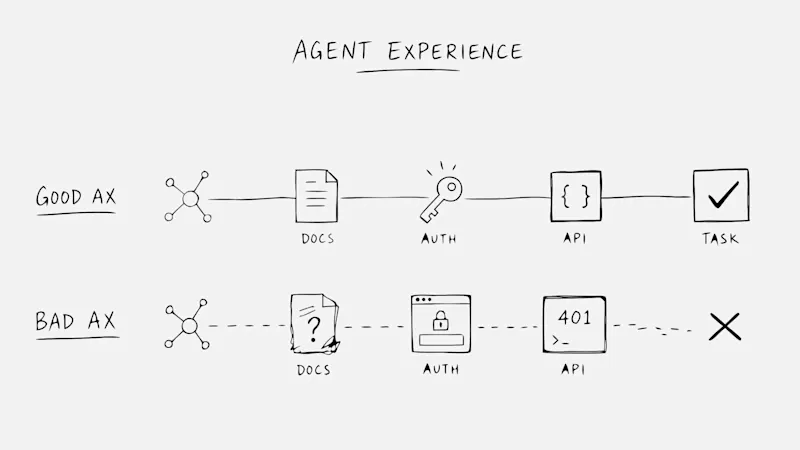
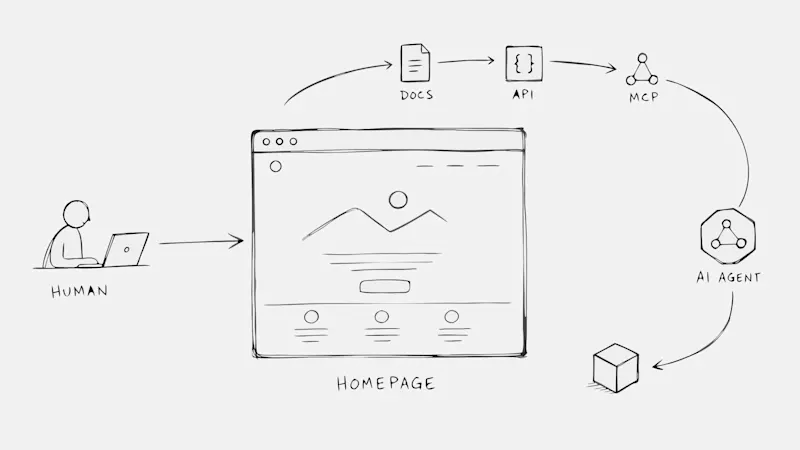
It is built for enterprise teams and agencies that want AI visibility tracking paired with technical content delivery. Beyond monitoring brand mentions and citations, its Agent Experience Platform serves a structured, AI-readable version of your site directly to crawlers like GPTBot and ClaudeBot, without touching your human-facing pages. It's SOC 2 compliant, but pricing starts around $250 to $300 a month with no low-cost tier, so it fits larger teams more than solo marketers or small businesses.

How to choose the right AI visibility monitoring tool

  • Best for startups and small teams: Look for tools with free tiers or low-cost entry points. GrowthOS offers a free plan, and Otterly.AI and Peec AI provide accessible pricing without long sales cycles. The goal at this stage is getting baseline data quickly without a major budget commitment.

  • Best for agencies and consultants: Prioritize white-label dashboards, multi-client management, and robust reporting. The GrowthOS agency tier and Peec AI are built for workflows where you're managing visibility for multiple brands. Client-facing reports and the ability to track competitors across accounts matter most here.

  • Best for enterprise organizations: Deep reporting, unlimited seats, and dedicated support matter most at scale. Profound, Scrunch AI, and GrowthOS Enterprise handle large-scale requirements with the analytics depth and support infrastructure that bigger teams expect.

What AI visibility software cannot do

AI visibility tools track AI outputs but cannot guarantee placement or control what LLMs say. AI answers vary by user and session, so measurements are approximations rather than absolutes. The tools sample prompts and report patterns, but they can't capture every possible query variation.

  • No guaranteed mentions: tools can show you where you're missing, but they can't force AI to recommend you

  • No direct influence on training data: you can optimize content, but you can't directly edit what LLMs learned

  • Session variability: the same prompt might generate different answers for different users

  • Sample-based measurement: results reflect tested prompts, not every possible query

Setting realistic expectations helps you use the data effectively without overinterpreting what it means.

Start measuring your AI search visibility

The first step is getting baseline data on where your brand stands. A free AI visibility report from GrowthOS shows how your brand appears across ChatGPT, Claude, Gemini, and Perplexity. It's delivered to your inbox in about two minutes with no credit card required, giving you a concrete starting point before deciding which tool fits your ongoing needs.

FAQs about AI visibility software

What is an AI visibility tool?
An AI visibility tool is software that tracks whether and how your brand appears when people ask ChatGPT, Claude, Gemini, or Perplexity for recommendations. It runs prompts relevant to your category, records the answers, and reports on mention frequency, sentiment, and share of voice against competitors.

What is the best AI visibility platform?
There's no single best platform for every team, since it depends on budget and coverage needs. GrowthOS is the strongest all-around option for teams that want tracking plus prioritized fixes across 15+ AI platforms. Profound and Scrunch AI fit enterprise reporting, Otterly.AI and Peec AI work for tighter budgets, and ZipTie specializes in Google AI Overviews.

How do AI visibility tools work?
Most follow the same three-step process. They run a batch of prompts your buyers might realistically ask across multiple AI platforms, record whether and how your brand appears in each answer, then compare your results against named competitors to calculate share of voice and flag content gaps.

What is the difference between AI visibility and SEO rank tracking?
SEO rank tracking measures where your site ranks in Google's results for specific keywords. AI visibility tracking measures whether your brand gets mentioned inside an AI-generated answer, a separate system with its own citation logic. A page can rank #1 on Google and never get mentioned by ChatGPT for the same query.

How often should I check my AI visibility metrics?
Weekly monitoring works as a minimum for most brands. Real-time alerts provide better coverage for competitive categories where rankings shift frequently. The right cadence depends on how fast your market moves.

Newsletter

Enjoyed this? Get the next one.

SaaS organic growth field notes, straight to your inbox. No spam, unsubscribe anytime.

No spam. Unsubscribe anytime.

Book a demo

See a SaaS growth week

30 minutes. Bring one KPI and your stuck backlog, leave with a written shipping plan, even if you don't hire GrowthOS.

Ship the SaaS backlog

Bring one SaaS growth KPI. Leave with a shipping plan.

30 minutes with a growth operator. Bring one KPI and your stuck organic backlog. Leave with a written shipping plan you can use, even if you do not hire GrowthOS.

30 minutes. No deck required. You leave with a written shipping plan, even if you don't hire GrowthOS.

Not ready to book? Talk to an expert